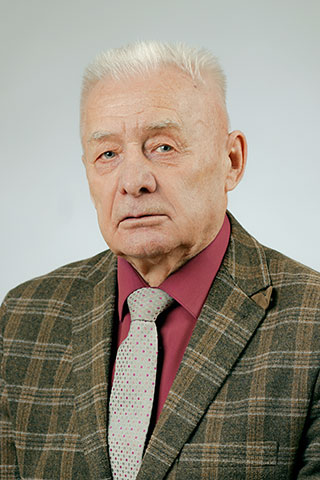
Pioneers of synthesis of ion-exchange materials. 120 years since the birth of Alexander Borisovich Davankov (1899-1971)
DOI:
https://doi.org/10.17308/sorpchrom.2019.19/744Keywords:
history of ion-exchange resins, chromatography history, history of ion-exchange, biography of Alexander Davankov.Abstract
Alexander Borisovich Davankov was born in 1989 as a 13-th child in a peasant’s family. Without receiving any systematic basic education, he finally managed to graduate from the 2nd Moscow University (1929) as a specialist in organic chemistry. Since then he was working in the Mendeleev Institute of Chemical Technology. Starting as a leader of a team that worked on oxidation of paraffins and synthesis of various
plastic materials he worked up to the position of a Head of Department for anion exchanging resins. Under the leadership of A.B. Davankov in the time period from the middle 1940th to the year 1970 more than 60 original ion exchange resins were developed. Production technology of the most prospective brands was systematically optimized on a pilot-scale plant and resins were manufactured for the use in various areas as
waste water purification from phenolic contaminants, recovery of gold and silver from technological solutions in jeweler industry, isolation of gold and uranium from sea water and many others. A.B. Davankov thus happened to be one of the first and most successful specialists in ion exchange in the Soviet Union. Initially he developed a series of ion exchange resins by polycondensation of formaldehyde with urea, melamine and guanidine. Besides effective adsorption of phenol contaminants, these products were found to selectively bind heavy metal ions acting as complex-forming resins. Similar properties were also found to characterize very first amphoteric resins. Later on, Davankov and co-workers suggested a series of efficient anion exchange resins based on polymers of vinylpyridines and cation and anion exchangers based on phosphorylated polystyrene copolymers. Suggestions of concentrating very large amounts of gold in a selective resin column by repeated sorption and electro-reduction cycles was the beginning of redox-type processes and materials. A. B. Davankov is the author of several monographs, textbooks, over 200 scientific articles, 50 patents, two popular-scientific brochures. He was lecturing in technology of cellulose-based and polymeric materials, ion exchange resins. For his outstanding pioneering achievements A.B. Davankov was awarded several important
state decorations.
Former students and co-workers of A. B. Davankov thankfully preserve many ironic poems composed by their teacher on the occasion of various festive events of the team. Also, the paper provides basic information about other research groups that were active in the field of ion exchange in the same period of time.